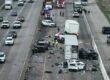




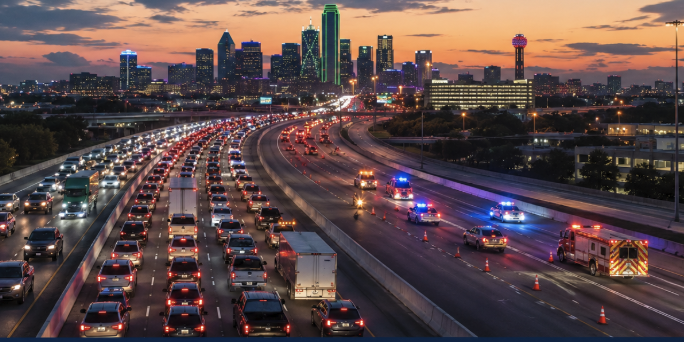
A multi-vehicle crash caused hours of traffic disruption on U.S. Highway 75 near Loop 12 in Dallas on Monday. According to The Dallas Morning News, all southbound lanes were closed following the collision, creating significant delays before the highway fully reopened Monday night.
U.S. 75 is one of the busiest roadways in North Texas, carrying commuters between downtown Dallas and communities including Richardson, Plano, Allen, and McKinney. When a collision blocks several lanes—or shuts down an entire side of the highway—the resulting congestion can create additional hazards for drivers approaching the scene.
Why Multi-Vehicle Highway Crashes Can Be Complicated
Determining responsibility in a crash involving several vehicles is often more complicated than evaluating a typical two-car collision. One initial impact may trigger a chain reaction involving multiple drivers, and more than one person or company may ultimately share responsibility.
Investigators may examine whether any driver was speeding, following too closely, distracted, impaired, or changing lanes unsafely. Road conditions, visibility, traffic patterns, vehicle defects, and the actions of commercial drivers may also become relevant.
Because the publicly available information about Monday’s U.S. 75 crash remains limited, it would be premature to assign fault or speculate about what caused the collision.
Evidence That May Be Important After a Dallas Highway Crash
Evidence can disappear quickly after vehicles are removed and traffic resumes. People injured in a multi-vehicle collision should document as much information as they safely can.
Potential evidence may include:
- Photographs and videos of the vehicles, roadway, and surrounding area
- Dashcam recordings from the vehicles involved or passing motorists
- TxDOT traffic-camera footage
- Statements and contact information from witnesses
- Police reports and emergency-response records
- Vehicle event-data recorder information
- Cellphone records when distracted driving is suspected
- Medical records connecting injuries to the collision
Drivers should also avoid making assumptions about fault at the scene. A complete investigation may reveal events that were not visible from one driver’s position.
Staying Safe Around a Major Traffic Closure
A crash scene can remain dangerous even after the initial collision has ended. Drivers approaching stopped traffic should reduce their speed gradually, leave additional following distance, and watch for emergency vehicles or motorists merging unexpectedly.
Drivers should never attempt to photograph or record a crash while operating a vehicle. Anyone who witnesses a collision should pull over only if there is a safe and legal place to stop.
What to Do After a Multi-Vehicle Accident
Anyone involved in a serious crash should seek medical attention, even if symptoms do not appear immediately. Certain injuries—including concussions and soft-tissue injuries—may become more noticeable in the hours or days following a collision.
Injured individuals should also preserve medical bills, repair estimates, photographs, insurance correspondence, and records of missed work. Speaking with an experienced Texas personal injury attorney can help someone understand the claims process and determine which insurance policies may apply.
Ben Bronston & Associates represents people injured in car, truck, and highway accidents throughout Dallas and across Texas. If you were hurt because of another party’s negligence, contact our office to discuss your legal options.
[Disclaimer: This blog post is for informational purposes only and does not constitute legal advice.]